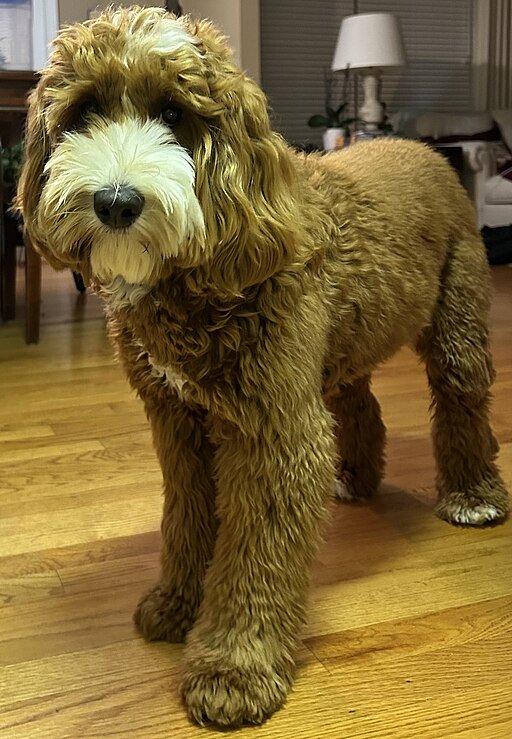

Why Therapy Dogs Are Trending — and Why the Australian Cobberdog Is Made for the Role
Something has shifted in the way we talk about mental health, healing, and what it means to feel truly supported. In hospitals and school counseling offices, in courtrooms where nervous witnesses need a calm presence, in the quiet of a home where someone is working through grief or anxiety — dogs are showing up, doing what they’ve always done best: offering unconditional connection. Therapy dogs have moved from a niche concept to a recognized, science-backed source of comfort, and demand for the right kind of dog has never been greater.
But here’s the thing: not every dog is suited for this role. And not every breed was developed with this purpose in mind. The Australian Cobberdog is different. This is a breed that wasn’t accidentally discovered to be good at emotional support — it was intentionally and carefully bred for exactly this kind of human connection. If you’re a family, a school, a care facility, or an individual wondering whether a therapy dog might change your life, this is a story worth reading.
The Rise of Therapy Dogs: What’s Driving the Trend
The numbers tell a compelling story. Mental health awareness has grown dramatically in recent years, and the COVID-19 pandemic accelerated something many of us already sensed — that human-animal connection isn’t a luxury, it’s a genuine contributor to wellbeing. Research continues to confirm what dog lovers have known forever: time spent with a calm, loving dog lowers cortisol, reduces blood pressure, and creates measurable feelings of safety and comfort.
Therapy dogs are now appearing in places that would have seemed unusual just a decade ago. Universities bring them in during exam seasons. Hospitals station them in oncology and pediatric wards. Legal systems use them to support child witnesses in courtrooms. Elementary schools have reading programs built around them. The landscape has expanded enormously.
It helps to understand the distinctions. Therapy dogs are trained to provide comfort and affection to people in therapeutic settings — they work with many people and are typically handled by their owners during visits. Emotional support animals (ESAs) provide comfort to a specific individual, often as part of a mental health treatment plan, without requiring specialized public-access training. Service dogs are trained to perform specific tasks for a person with a disability and have legal public-access rights. Each role is meaningful — and knowing which one fits your situation is an important starting point.
What all three have in common is this: the dog’s temperament, coat, adaptability, and early upbringing matter enormously.
What Makes a Great Therapy Dog? The Traits That Truly Matter
Ask any experienced therapy dog handler what they look for in a candidate, and temperament will be the first word out of their mouth. Not tricks. Not obedience scores. Temperament.
The best therapy dogs are calm without being disengaged. They’re intuitive — they seem to feel the emotional temperature of a room and respond accordingly. They’re non-reactive in the face of loud sounds, sudden movements, or unfamiliar environments. And they are deeply, genuinely people-oriented in a way that isn’t manufactured through training — it’s woven into who they are.
This is a crucial distinction. You can train a dog to sit quietly. You cannot train a dog to care about the person sitting next to them. That quality has to come from the dog’s nature — and from the breeding decisions that shaped that nature generations back.
Coat matters too, especially in sensitive environments. Therapy dogs working in hospitals, allergy clinics, or schools with sensitive children need to be low-shedding and low-dander. This isn’t just about cleanliness — it’s about access. A dog that triggers allergic reactions simply cannot do the job in many settings.
Size and adaptability round out the picture. A great therapy dog is comfortable whether they’re navigating a busy elementary school hallway or sitting quietly beside a hospital bed. They adjust. They read the room. They settle in wherever they’re needed.
And none of this happens by accident. It begins in the very first weeks of life.
The Australian Cobberdog: A Breed Born for Human Connection
The word cobber is Australian slang for a close friend — a mate, a companion you’d trust with anything. It’s a perfect name for a breed that was developed from the ground up with one central goal: to be the ideal human companion and assistance dog.
The Australian Cobberdog traces its intentional development to Australia, where breeders worked carefully over decades to create a dog with consistent, documentable traits — a reliably gentle temperament, a low-shedding fleece or wool coat, and an almost uncanny emotional intelligence. This wasn’t a happy accident of crossing popular breeds. It was purposeful, thoughtful, and rigorously documented work aimed at producing dogs fit for therapy and assistance roles.
What sets the Australian Cobberdog apart from other doodle-type breeds is that intentionality — the consistent lineage, the breed standards, the focus on function over fashion. Learn more about what makes the Australian Cobberdog unique and why this distinction matters when you’re choosing a dog for a meaningful role.
Families who bring an Australian Cobberdog home often describe the same experience: this dog notices them. When someone is sad, the dog is there. When a child is overwhelmed, the dog is calm. When a household is joyful, the dog matches that energy too. It’s an emotional attunement that feels almost remarkable — and it speaks directly to why this breed has become so sought after as therapy dogs and devoted companions.
Health Testing and Ethical Breeding: The Foundation of a Trustworthy Therapy Dog
When a dog is going to serve as a therapy or emotional support animal, reliability isn’t optional — it’s essential. A dog working in a hospital or supporting someone through grief needs to be not just temperamentally sound, but physically healthy and built to last. That’s where health testing becomes non-negotiable.
At Mountain Ayres, every breeding decision begins with rigorous health testing of the parent dogs. Hips, elbows, eyes, cardiac function, and comprehensive DNA panels — these aren’t boxes to check, they’re the foundation of responsible breeding. Pairing two health-tested, carefully selected dogs dramatically improves the likelihood that their offspring will be healthy, long-lived, and structurally sound.
But health testing alone isn’t enough. The other half of the equation is temperament. Ethical breeding means selecting parent dogs not just for their beautiful coats or their clear health panels, but for their emotional stability, their gentleness, their intuitive connection to people. These traits are heritable. When you breed a calm, people-devoted dog to another calm, people-devoted dog, you get puppies who carry that quality forward.
Montana’s wide open spaces and unhurried pace of life aren’t just a backdrop — they’re part of what shapes the dogs raised here. Puppies born at Mountain Ayres come into the world in an environment that is calm, spacious, and full of loving human presence from day one. That beginning matters more than most people realize.
Raised with Love: Socialization That Sets Therapy Dogs Up to Succeed
The first weeks of a puppy’s life contain a window that cannot be reopened. What happens during those early weeks — the sounds a puppy hears, the textures they touch, the people who hold them, the experiences that are introduced gently and positively — shapes their emotional landscape for life.
At Mountain Ayres, litters benefit from early neurological stimulation protocols and structured socialization from their very first days. Puppies are introduced to a wide variety of people, environments, and sensory experiences while still in the care of their breeder — because this is the window when resilience is built, when a dog learns that the world is a safe and interesting place.
This is one of the most meaningful differences between a puppy raised in a family home environment and one raised in a traditional kennel setting. Home-raised puppies are accustomed to the rhythms of human life: voices, laughter, the sounds of a household, the presence of children. They arrive in their new homes already emotionally prepared.
View our current and planned litters to get a sense of what’s coming, and explore the gallery to see how our puppies grow up. For families who are interested in pursuing formal therapy dog certification, Mountain Ayres is happy to offer guidance on next steps and training resources — because a well-prepared puppy is only the beginning of a beautiful partnership.
Is an Australian Cobberdog the Right Therapy Dog for Your Family or Organization?
The families and individuals who find their way to Mountain Ayres tend to have done their research. They’re not looking for just any dog — they’re looking for the right dog. And often, they’re imagining a dog who will do more than keep them company. They’re imagining a life-changing companion.
Australian Cobberdogs thrive in homes with children, where their gentle patience and playful devotion make them beloved family members almost immediately. They’re an excellent choice for allergy-sensitive households, where their low-shedding coats make a real difference — though it’s worth noting honestly that no dog is 100% hypoallergenic, and individual sensitivities vary. They’re a natural fit for individuals managing anxiety, grief, or the need for consistent emotional support. And they are increasingly sought after by schools, therapy practices, and care facilities looking to add a therapy dog to their team.
What the adoption process at Mountain Ayres looks like is intentional by design. There’s an application and a waitlist — not to create artificial exclusivity, but because matching the right puppy to the right home is something we take seriously. Learn more about our adoption process and our commitment to every puppy we place.
One honest note for families considering the therapy dog path: formal certification requires training, consistency, and commitment that extends well beyond puppyhood. It’s a rewarding journey, but it’s a journey. Mountain Ayres puppies are set up beautifully for it — and we’ll always be here to support you along the way.
The best therapy dogs don’t happen by accident. They’re the result of decades of intentional breeding, rigorous health testing, and the kind of early love and socialization that only a devoted breeder can provide. When all of those elements come together, the result is something genuinely remarkable — a dog who walks into a room and makes everyone in it feel a little safer, a little more seen, a little less alone.
For the right family, school, or organization, an Australian Cobberdog from Mountain Ayres can be exactly that. Not just a pet. A source of healing. A devoted companion who was, in every meaningful sense, made for this.
If that sounds like what you’ve been looking for, we’d love to hear from you. Explore our puppies, browse our planned litters, and reach out with your questions. Every great match begins with a conversation.